
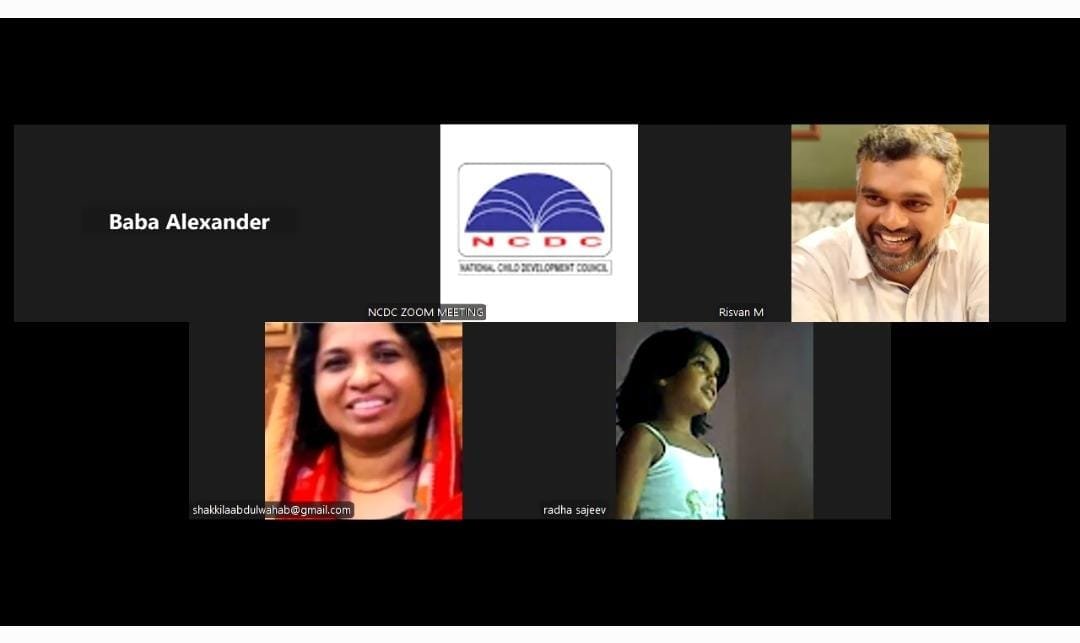
NCDC Core Committee Expressed Serious Concerns about Deteriorating Social Ethics of Indians
New Delhi, September 22: During a recent core committee meeting of the National Child Development Council (NCDC), members expressed grave misgivings regarding growing shortsightedness on social ethics, civic values, and public self-discipline among Indian citizens, both in India and globally. The meeting, with participation of important educators and development professionals, centered on the imperative to tackle behavioural problems impacting India’s social image and collective accountability.
Members of the committee referred to several incidents and reports in recent times of a rising neglect for public cleanliness, propriety, and civic decency, especially by Indian tourists and expatriates. Some of the key problems discussed were public littering, spitting in public places, unpunctuality, indiscipline in queues, abuse of public property, and noise pollution.
“We are seeing a gradual erosion of fundamental social values and public standards of behaviour,” one senior NCDC member declared. “Whether at home on our own streets or in foreign airports, the trend is disturbing and must be acted on urgently.”
Social Behaviour Abroad: A Global Embarrassment
Members referred to a number of incidents in which Indian citizens overseas were said to have been condemned for unhygienic conditions and rowdy behavior. In one such recent incident in the United Kingdom, the authorities were worried about Indian tourists spitting paan (betel nut) on the streets — an act that has attracted widespread criticism and tarnished the reputation of India.
Besides, tour companies in Europe and North America have allegedly started issuing special notices to Indian tourist groups on punctuality and behavioural standards, after repeated complaints of delays and holdups caused by some individuals.
Domestic Issues: A Civic Breakdown
The committee also had concerns over lingering problems in the country, such as: Littering on public areas, especially beaches and tourist areas, Improper disposal of domestic waste, usually by children commissioned by adults, Vandalism of public property and heritage tourist sites by graffiti, Excessive noise along with public transport and residential areas, and Disregard of traffic rules, such as risky overtaking and abuse of narrow roads.
Members pointed out that though India has made strides in education and technology, the nation still seems to have problems regarding basic civic conduct.
“Civic sense is not an academic subject, but a lived responsibility,” a speaker noted. “Without it, even the best infrastructure or education is incomplete.”
Rise in Online Misconduct and Social Media Bullying
The panel also touched upon the growing number of cases of online harassment, trolling, and social bullying by Indian users on social media platforms. The growth of social media has, in most instances, resulted in a decline in civilized debate, with users resorting to personal attacks and indecent comments.
Japan Cited as Model for Civic Discipline
Members used Japan’s public conduct and civic values as a model that India must follow. Japan’s success in having clean public areas, well-organized traffic rules, and disciplined public behavior was all due to systematic civic values education from early childhood.
“If Japan is incorporating civic ethics in its education system, then India also needs to do the same,” a member said.
Solutions Proposed: Focus on the Next Generation
The committee was in consensus that reform has to start with children because bringing about a change in adult behavior is very challenging. Major proposals were: Incorporating civic sense and social ethics in the curriculum of schools, Practical activity-oriented learning on cleanliness, public behavior, and social responsibility, Initiating competitions and awareness programs in schools and colleges, Incorporating value-based stories and lessons in school textbooks.
Call for Government and Community Action
NCDC members called on local government and the government to further these efforts through: Strict enforcement of anti-noise and litter laws, Expanded access to public waste disposal facilities, Public information campaigns at the national and regional levels, and Promoting citizen-sponsored initiatives for clean, responsible communities.
Conclusion: A Matter of National Pride
The NCDC core committee concluded that India’s overall development requires the focus of declining social ethics. While the nation is moving towards becoming a global leader, it also needs to keep pace with economic growth with civic duty and ethical behavior.
“India should be renowned not only for its technology and talent,” one committee member stated, “but also for its discipline, respect for others, and common civic values.”
Notably, The National Child Development Council (NCDC) is a self-governing national organization dedicated to advancing women’s rights and ensuring quality education for children across India. To learn more about the NCDC, particularly its Montessori teacher training course and application process, you may visit the NCDC website at https://ncdconline.org/courses or contact the Faculty In-Charge at +91 73566 07191.